

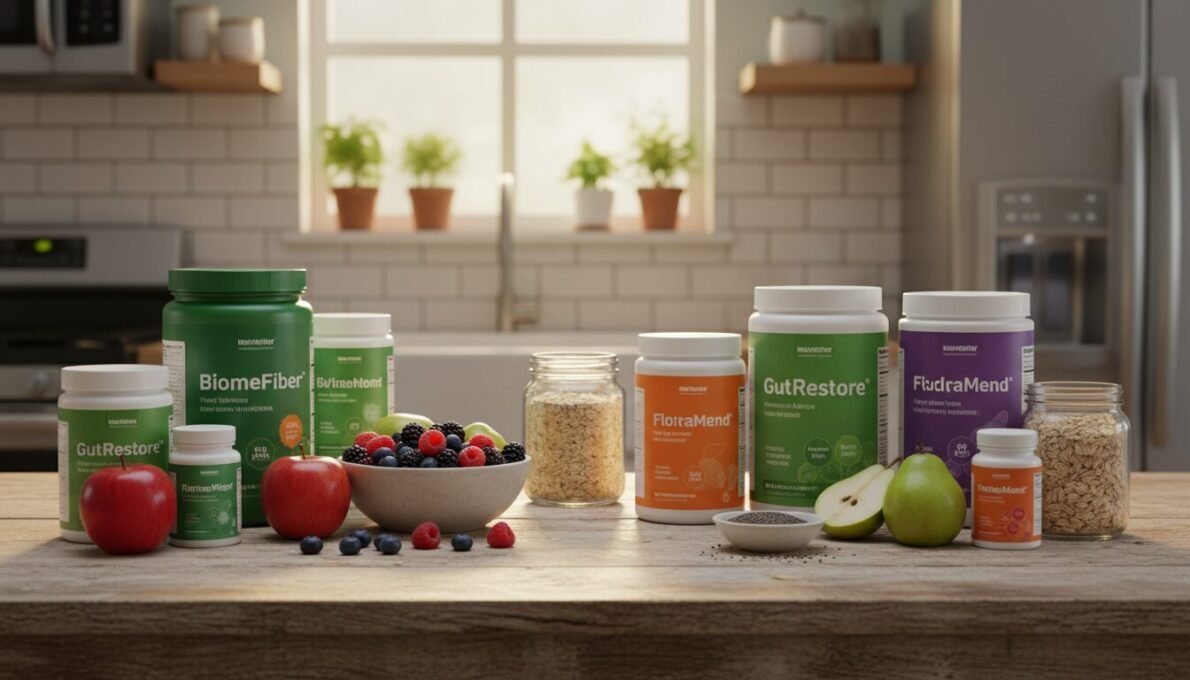
Fiber Supplements: The 2026 Gut Health Must-Have
Most people nowadays fall short of daily fiber intake from whole foods, so many turn to a daily supplement as a practical top-up. This roundup compares options by goal: regularity, cholesterol support, blood sugar control, IBS comfort, and kid-friendly picks.
We explain how to choose a product and how to use it safely. Not all forms act the same: some slow digestion and help blood sugar, others add bulk or ease diarrhea.
Quick safety note: if you have new or worsening abdominal pain, severe bloating, or signs of obstruction, see a clinician before adding a bulk-forming product.
Key Takeaways
- Whole foods are preferred, but a daily supplement can help meet targets when diet falls short.
- Pick a product based on goals: regularity, cholesterol, blood sugar, IBS, or kid needs.
- Start low, increase slowly, and drink plenty of water to reduce bloating and choking risk.
- Psyllium is well studied for cholesterol and blood sugar, while methylcellulose and calcium polycarbophil suit other needs.
Why Fiber Matters for Gut Health and Beyond in 2026
Good daily intake helps stool consistency and routine, so many people prioritize reliable ways to support digestion between meals.
Digestive regularity and bowel comfort
Soluble and insoluble forms work together to improve stool quality and make bowel movements easier to pass. Pairing them with plenty of water reduces constipation and limits straining.
Better regularity means fewer surprises: more predictable bowel patterns, less pain, and gradual long-term improvement in stool form.
Heart and metabolic benefits
Viscous, gel-forming types can bind cholesterol in the digestive tract, helping lower LDL and cutting heart disease risk. That effect supports overall cardiovascular health.
At the same time, these fibers slow carb absorption, blunting blood sugar spikes and increasing fullness after meals. That helps with weight and metabolic goals prioritized in 2026 wellness plans.
Use and limits
Benefits depend on type, dose, and consistency. More is not always better—too much too fast can increase bloating or worsen constipation.
Soluble vs Insoluble Fiber: What Your Body Actually Needs
Start with how each type feels. That makes it easier to match a choice to your symptoms and needs. This brief guide explains practical effects so you can pick between food sources or a targeted supplement.
Soluble: gel-forming, slower digestion, and satiety
Soluble fibers form a soft gel in the stomach and slow digestion. That can make you feel fuller after a meal and steady post-meal blood sugar.
Expect softer stool and a slower transit time. These effects help people who want greater fullness or steadier energy between meals.
Insoluble: bulk and sweep for easier bowel movement
Insoluble adds bulk and helps move stool along. It encourages water to stay in the colon, which improves passage and eases constipation.
People with slow transit or hard stools often feel relief when they add more bulk from whole foods or a mixed supplement.
Fermentable vs non-fermentable — and why bloating happens
Some fibers feed gut bacteria; these are fermentable. Bacterial action can produce gas and cause bloating in sensitive users.
Non-fermentable types pass with less gas. Match type to symptoms:
- Constipation-prone: favor bulk-forming, water-retaining options.
- Diarrhea-prone or very bloating-sensitive: consider non-fermentable choices.
- Mixed patterns: use a blend and increase slowly to watch for bloating.
Next: many products use functional fibers with specific, studied properties. That helps when you choose supplements for a clear goal.
Functional Fibers in Supplements: What They Are and How They Work
Functional fibers are isolated, non-digestible carbohydrates added to products to deliver specific physiologic effects. They differ from whole-food fiber because they are concentrated ingredients made for a target result—regularity, cholesterol support, or blood sugar control.
Common, evidence-backed examples
- psyllium / psyllium husk: gel-forming and well studied for cholesterol and metabolic benefits.
- Methylcellulose: non-fermentable option that adds bulk without much gas.
- Calcium polycarbophil: holds water to improve stool form and regularity.
- Inulin: fermentable prebiotic that feeds beneficial bacteria but can increase bloating in sensitive users.
Why viscous, gel-forming matters
Viscous fibers form a soft gel in the gut. That gel can slow nutrient absorption and bind cholesterol, which helps lower LDL levels and blunts post-meal blood sugar spikes. These actions explain why some ingredients show consistent clinical benefits.
“Compare labels by effective grams per serving, not by flashy claims.”
| Ingredient | Key action | Best for |
|---|---|---|
| psyllium | Viscous gel, partially fermentable | Cholesterol, regularity, blood sugar |
| Methylcellulose | Non-fermentable bulk | Constipation with low bloating risk |
| Calcium polycarbophil | Water-retaining bulk | Mixed bowel patterns, stool form |
| Inulin | Prebiotic fermentable | Feeds beneficial bacteria; may cause gas |
Quick tips: check fiber grams per serving and match ingredients to your goals. Use a supplement as a tool to complement a varied diet, not replace it.
Should You Use a Fiber Supplement or Focus on Fiber-Rich Foods?
Choosing between whole foods and a daily product depends on how often your meals include high-fiber choices. Aim to make most grams come from real food before adding a product.
Why food first: whole foods provide vitamins, minerals, antioxidants, and varied nutrition that a product cannot replicate. They also offer texture and satiety that help steady appetite and support weight goals.
Everyday food picks to prioritize
- Berries and apples
- Leafy greens and other vegetables
- Beans, lentils, and other legumes
- Oats, whole wheat, and whole grains
- Nuts and chia or flax seeds
When a supplement may help
Use a product if you have low daily intake, tight schedules, limited cooking, picky eaters, or clinician-guided needs. Match a choice to tolerance (bloating), convenience, and your target grams per day.
| Scenario | Best approach | Why |
|---|---|---|
| Busy schedule | Food upgrades + occasional product | Fast way to top off intake without extra cooking |
| Picky household | Fortified foods or measured product | Consistent grams per day with less waste |
| Weight management | Meals rich in whole foods | Fills you up and supports steady eating patterns |
Who Benefits Most From Fiber Supplements (and Who Should Avoid Them)
When stool form or routine is off, a planned product can be a practical short-term tool to restore consistency. Use choices that match your needs: some add bulk, others absorb water or form a gel that slows digestion and steadies blood sugar.
Who often benefits
- Constipation: people with hard stools or slow transit who need regular bowel movements.
- Those with frequent loose stool who need bulking to reduce diarrhea episodes.
- People with IBS whose symptoms are pattern-specific and respond to a targeted ingredient.
- Individuals aiming to support cholesterol or lower post-meal blood sugar as part of medical advice.
When to use caution
Avoid or pause if you have a known bowel obstruction, impacted stool, trouble swallowing, esophageal stricture, or active intestinal inflammation. These conditions raise serious risk and need clinician input.
Inflammatory bowel disease considerations
Crohn’s or ulcerative colitis patients should coordinate any change with their clinician, especially during flares. A product that helps in remission can irritate during active disease.
| Situation | Action | Why it matters |
|---|---|---|
| Constipation | Choose bulk-forming or water-retaining option | Improves stool form and eases bowel movements |
| Diarrhea | Pick non-fermentable bulking agent | Absorbs water and reduces frequency |
| Difficulty swallowing or obstruction | Avoid product; seek medical care | Risk of choking or worsened blockage |
Note: some ingredients can reduce absorption of certain medications, including diabetes drugs. Space doses and ask a clinician if you take regular prescriptions. If you have severe pain, ongoing diarrhea, or worsening constipation, get evaluated before increasing intake.
How We Chose the Best Fiber Supplements for 2026
We ranked products by real-world use: how well each option meets specific goals and daily routines.

Selection criteria
Source and dose: we checked fiber source and effective grams per serving. That shows whether a serving delivers clinically useful amounts.
Additives: simple ingredient lists score higher. Artificial colors, sweeteners, and sugar alcohols can affect tolerability and long-term use.
Dietary fit and value
Filters included vegan, gluten-free, and allergen-friendly options so shoppers can match products to dietary needs. We also tracked cost per day and servings per container to judge value.
Quality signals and form factors
Quality: third-party testing, USP verification, and ConsumerLab notes were must-haves for label accuracy and contaminant checks.
Forms compared: powders for flexible dosing, capsules and caplets for ease, gummies for compliance, and functional foods like chia for food-first fans.
| Criterion | Why it matters | Practical tip |
|---|---|---|
| Grams per serving | Determines effectiveness for goals | Compare actual grams, not claims |
| Ingredient simplicity | Reduces side effects and surprises | Avoid extra sweeteners if sensitive |
| Third-party testing | Confirms purity and label accuracy | Look for USP or ConsumerLab mention |
Fiber Supplements: The 2026 Gut Health Must-Have for Every Goal
This buyer’s guide maps top options to common goals so you can pick a product that fits your routine.
- Best overall: Yerba Prima Psyllium Husks Powder — 4.5g per rounded teaspoon. Single-ingredient, research-backed, and easy to mix into food.
- Best for constipation: Viva Naturals Organic Ground Flaxseed — 3g per 2 tbsp; adds mixed fiber plus omega-3s but may cause bloating in some.
- Best for regularity (diarrhea + constipation): Citrucel Methylcellulose Caplets — 2g per 2 caplets; non-fermentable and low gas risk.
- Best for IBS symptoms: FiberCon (calcium polycarbophil) — 1g per 2 caplets; good for mixed bowel patterns.
- Best for diverticulosis: Metamucil psyllium capsules — 2g per 5 capsules; note serving counts can be high.
- Best for blood sugar support: NOW Foods Acacia Fiber Powder — soluble, easy to dissolve; helps fullness and steadying post-meal sugar.
- Best for kids: L’il Critters Fiber Gummy Bears — 3g per 2 gummies; boosts compliance but check added sugar or sweeteners.
- Best functional food: Navitas Organics Chia Seeds — 3g per tbsp; whole-food option with added nutrition from seeds.
- Best low-FODMAP for sensitivity: Tomorrow’s Nutrition Sunfiber (PHGG) — dissolves without thickening; third-party tested and Monash-certified.
Quick tip: match an ingredient to your goal and compare grams per serving.
Best Overall: Psyllium Husk Powder for Daily Soluble Fiber
Psyllium husk powder stands out as a go-to daily option for people who want broad, research-backed benefits. It works across regularity and metabolic markers, so many product lines center on this ingredient.
Why psyllium is so well supported
Psyllium is a viscous, gel-forming, non-fermentable soluble ingredient with multiple clinical notes. Studies link it to lower LDL cholesterol and improved post-meal blood sugar control.
What to expect when you use it
The husk thickens quickly and makes drinks or smoothies feel gel-like. That gel increases fullness and often eases both constipation and loose stool by normalizing bowel movements.
How to use it safely and effectively
Start with a smaller serving and increase over days to watch for tolerance. Mix quickly and drink promptly—many brands advise consuming immediately because the mix thickens fast.
- Mixing tips: stir into water, yogurt, or a smoothie and follow with extra water.
- Safety note: always take additional water after a dose to prevent choking and ensure proper thickening effects.
- Timing: fullness is often instant; bowel regularity usually improves within days of consistent use.
Best for Constipation: Flaxseed for Soluble + Insoluble Support
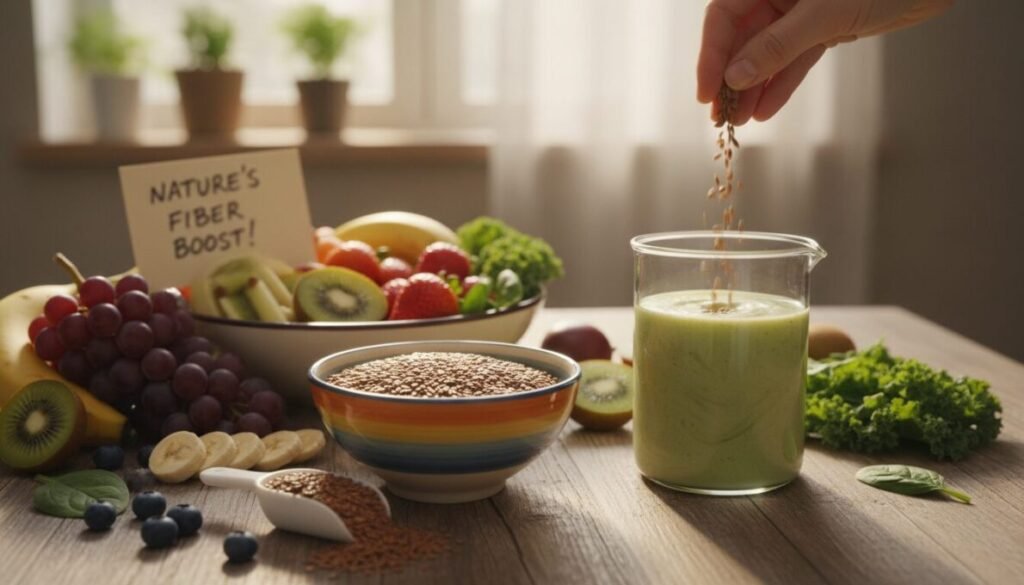
Ground flaxseed combines soluble and insoluble elements in one scoop. Insoluble bits add soft bulk that helps move stool through the bowel. That bulk can ease strain and make bowel movements more predictable.
How added bulk eases passage
Insoluble material increases volume and encourages regular movements. This helps when slow transit or hard stools cause ongoing constipation.
Nutrition beyond fiber
Flax seeds deliver omega-3 fats and plant protein. Those nutrients may support blood sugar balance and add useful nutrition to a varied diet.
Easy ways to use ground flaxseed
- Stir into yogurt or oats.
- Blend into smoothies or pancake batter.
- Sprinkle over salads or mixed foods for texture.
“Start small and increase slowly to watch for bloating.”
| Feature | Benefit | Tip |
|---|---|---|
| Mixed fiber (soluble + insoluble) | Soft bulk and gel effects | Use 1 tbsp daily, increase if tolerated |
| Omega-3s | Cardio and metabolic support | Add to meals for steady nutrition |
| Tolerance | May cause gas or bloating | Slowly raise dose and drink water |
Note: treat ground flaxseed as a food-like supplement. Stay hydrated and be consistent for reliable movements and easier stool passage.
Best for Diarrhea and Constipation: Non-Fermentable Methylcellulose Caplets
Methylcellulose caplets are a simple, measured option when bowel patterns swing between loose and hard stools. Citrucel (methylcellulose) absorbs water and helps form cohesive stool without feeding gas-producing bacteria.
Why non-gas-producing options suit sensitive users
Non-fermentable ingredients reduce the chance of bloating because they pass with minimal bacterial fermentation. That makes them a common pick for people who need relief without added gas.
Adult dosing guidance and safety
Start with 2 caplets as your first serving and increase slowly. Do not exceed 6 caplets per day. Always take each dose with at least 8 oz of water to prevent choking and to let the ingredient work.
- Dual action: absorbs water to firm loose stool and adds bulk for constipation relief.
- Label note: some products contain dyes, binders, or fillers—check ingredients if you prefer minimal additives.
- Practical tip: caplets are tidy for travel or office use and avoid mixing mess.
| Feature | Why it matters | Practical note |
|---|---|---|
| Methylcellulose | Non-fermentable; low gas | Good for bloating-prone users |
| Dosing | Start low, assess effects | 2 caplets starter; max 6 per day |
| Water | Ensures proper expansion | At least 8 oz with each serving |
“Choose a measured caplet when you need consistent results with minimal GI side effects.”
Best for IBS: Calcium Polycarbophil for Mixed Bowel Patterns
For people with alternating constipation and loose stool, a measured bulk-forming choice often helps normalize output. Calcium polycarbophil (sold as FiberCon) is a non-fermenting option that adds bulk without feeding gas-producing bacteria.
IBS-C, IBS-D, and IBS-M: matching action to symptoms
IBS-C benefits when added bulk softens hard stool and eases movements. IBS-D may improve when bulk firms loose stool and slows transit. IBS-M—mixed patterns—often needs a middle-ground ingredient that stabilizes consistency.
How to minimize side effects: pace intake and watch additives
Start with a small dose and increase over 1–2 weeks while tracking changes. Take each dose with at least 8 oz water to prevent choking and to let the product work.
- Avoid stacking multiple new supplements at once.
- Choose options with minimal ingredients and few additives to reduce intolerance.
- Be aware that large caplets can be hard to swallow for some readers.
“Pick a simple, non-fermenting bulking option when bloating is a main concern.”
Best for Blood Sugar and Cholesterol: Choosing the Right Soluble Fiber
Soluble options can slow how quickly carbohydrates reach the bloodstream, which helps steady post-meal glucose. That mechanism supports better blood sugar control and can reduce glycemic swings after meals.
How soluble fiber slows carbohydrate absorption
Viscous, gel-forming ingredients thicken in the gut and slow digestion. This delays glucose entry into the blood and blunts fast sugar spikes.
How soluble types help lower cholesterol
Some soluble fibers bind bile acids and cholesterol in the digestive tract. Over time, this can help reduce LDL cholesterol and improve cholesterol levels when paired with a heart-smart diet.
Comparing psyllium, acacia, and PHGG (Sunfiber)
Psyllium (including psyllium husk) is viscous and well studied for lowering LDL and helping blood sugar; it forms a thick gel and suits many users.
Acacia is a soluble prebiotic that feeds beneficial bacteria but may be more fermentable and cause gas in sensitive people.
PHGG (Sunfiber) dissolves without thickening, is Monash low-FODMAP certified, and often fits users who want less texture and lower bloating risk.
| Ingredient | Key action | Best for |
|---|---|---|
| psyllium / psyllium husk | Viscous gel; slows carbs and binds cholesterol | Blood sugar control, LDL reduction |
| Acacia | Soluble prebiotic; feeds bacteria | Prebiotic benefits; may increase gas |
| PHGG (Sunfiber) | Easy-dissolve soluble; low-FODMAP | Sensitivity to bloating; gentle texture |
“Match an ingredient to goals: texture, tolerance, and whether you want a prebiotic effect.”
- Selection cues: taste and mouthfeel matter for daily use.
- Watch bloating sensitivity when choosing a product.
- Fiber can aid fullness and support weight goals, but overall diet and intake patterns determine results.
- If you take diabetes medications, talk to a clinician about timing to avoid unexpected effects on blood sugar.
How to Take Fiber Supplements Safely: Timing, Water, and Medications
Small habits — like when you drink water and how you space pills — cut side effects and boost results.
How much water to take to reduce choking risk
Always take each dose with at least 8 oz of water or follow label directions. Do not swallow dry powders, gummies, or caplets without fluids.
Extra fluids help the product expand and move through the throat and bowel safely. That lowers the risk of choking and improves effects on digestion.
Increase grams gradually to reduce gas and bloating
Start low and add a small amount every few days until you reach your target. A slow step-up eases adjustment and cuts bloating and discomfort.
Space from medications and other supplements
Separate doses from prescription drugs by at least 1–2 hours when possible. Some products can reduce absorption of meds, so check with a clinician or pharmacist about timing.
When to take it: meals vs evening use
Take with meals to increase fullness and blunt post-meal glucose spikes. For morning regularity, some people use an evening dose per label instructions to encourage a bowel movement the next day.
- Watch for warning signs: severe abdominal pain, worsening constipation, or trouble swallowing—stop and seek care.
- Practical tips: set reminders, track daily intake, and keep water near you to maintain tolerance and consistency.
“Follow label guidance and ask a clinician if you take regular medications to avoid unexpected interactions.”
Conclusion
,Aim to get most grams from whole foods first and use a single, goal-focused product to close gaps. Real-food nutrition supplies vitamins, texture, and steady intake that support long-term results for your gut and overall health.
Match a choice to needs: choose psyllium husk for broad evidence, methylcellulose for low-gas regularity, flax or chia for food-based options, and PHGG for low-FODMAP sensitivity. That helps with constipation, cholesterol, and post-meal blood sugar goals while feeding helpful bacteria when desired.
Safety matters. Increase dose slowly, take each serving with plenty of water, and space a supplement from medications. Stop and see a clinician if you have severe pain, impaction risk, or active disease.
When shopping, check grams per serving, ingredient list, third-party testing, and cost per day. Be consistent—benefits grow over time and side effects usually ease with gradual titration and hydration.