


Collagen vs. Other Beauty Supplements: What Works?
This page compares popular skin and hair aides so readers can decide what fits their goals. Production of collagen starts to drop around age 25 at roughly 1% per year, so many people look for practical ways to support skin elasticity and overall vitality.
We define “beauty supplements” here to mean collagen peptides, biotin, and common add-ons that target skin, hair, and nails. Results depend on baseline diet, age, and how consistently a product is used.
The article evaluates absorption, convenience, cost, and typical dosing from current studies. It also covers safety points like marine product allergies and biotin’s potential to skew lab tests.
Read on to learn how collagen works in the body, how peptides are absorbed, where biotin fits, and how to pick a form and dose that matches your needs.
Key Takeaways
- Understand goals: pick products based on skin elasticity, hydration, or hair thinning.
- Form matters: powders and pills offer different convenience and dosing options.
- Evidence-informed dosing: follow typical ranges studied rather than promises.
- Safety first: watch for marine allergies and biotin lab interference.
- Personal factors: age, diet, and consistency shape results.
Why beauty supplements matter for skin health as you age
As we age, targeted skin aids gain importance because the skin’s protein scaffold thins steadily after the mid-20s. Studies show that collagen begins a slow decline of roughly 1% per year starting in the mid-20s, and that shift changes skin structure over time.
Early signs from a slow decline
That 1% yearly loss adds up. Over decades, people notice less firmness, reduced hydration, and the gradual arrival of fine lines. These are common signs aging routines try to address.
Visible targets for routines
Typical goals include fewer wrinkles, improved elasticity, better skin hydration, and less hair thinning or breakage. Routines focus on these outward signs to help the face and body look and feel more resilient.
Key lifestyle accelerators
Certain factors speed loss: UV exposure, smoking, and a poor diet. These factors can reduce the benefit you might see from any product.
Practical note: supplements can complement daily sun protection, adequate protein, and nutrient-dense meals—but they don’t replace those basics.
“Addressing structure and nutrition together gives the best chance to slow visible aging.”
Understanding how the body builds and repairs its structural proteins will help you choose between peptide-based options and other approaches in the next section.
Understanding collagen in the body: protein, peptides, and collagen synthesis
The body relies on structural protein that acts like scaffolding for skin, joints, bones, and connective tissue. This network gives tissues firmness and functional strength. About 30% of total protein in the body is this structural type, and Type I represents roughly 90% of it.
What it does for skin, joints, and muscles
The scaffold supports skin elasticity, joint cushioning, and muscle resilience. When intact, tissues recover faster and feel firmer. Loss of this support reduces flexibility and perceived strength over time.
Main types you should know
| Type | Primary location | Main role |
|---|---|---|
| Type I | Skin, bones, tendons | Structural support and firmness |
| Type II | Cartilage | Joint cushioning |
| Type III | Muscles, organs, blood vessels | Flexibility and organ support |
Building blocks and synthesis
Collagen synthesis depends on adequate dietary protein and the right amino acids. Glycine and proline are key amino acids used to rebuild fibers. Hydrolyzed forms break the full protein into small peptides so the body can absorb usable fragments.
Supplements supply amino and peptide building blocks — not finished tissue.
Collagen supplements: what they are and how collagen peptides work
Pre-digested peptide products speed the arrival of usable amino acids to tissues. Hydrolyzed collagen—often called collagen peptides—are proteins broken into small pieces to help the gut absorb them faster.
Hydrolyzed peptide forms versus gelatin
Hydrolyzed collagen is water-soluble and mixes easily at room temperature. Gelatin gels when cooled and can be less convenient for daily use. Peptides suit cold drinks and coffee without clumps.
How the body absorbs and uses peptides
The digestive process breaks peptides into amino acid units and short fragments. Some studies show peptides appear in the bloodstream in about one hour and can stay elevated for up to twelve hours.
These fragments supply the raw material the body uses for repair and maintenance across skin, joint, and connective tissues.
“Supplying small peptides gives tissues access to building blocks more quickly than intact proteins.”
Sources and best forms for consistency
Common sources include bovine collagen (Type I & III), marine collagen from fish (Type I), and chicken-derived Type II for joint support.
| Source | Typical types | Best use |
|---|---|---|
| Bovine | Type I & III | Skin, general support |
| Marine (fish) | Type I | Skin hydration; may absorb well |
| Chicken | Type II | Joint-focused support |
| Forms | Powder, capsules, liquid | Powder for dose flexibility; pills for travel; liquid for convenience |
Practical note: Choosing the right form and dose matters more than the label term. Consistent use, matching target outcome, and simple dosing drive results over time.
Other beauty supplements to know: biotin and beyond
Biotin is a small, water-soluble B vitamin that helps support hair and nail structure by feeding keratin pathways.
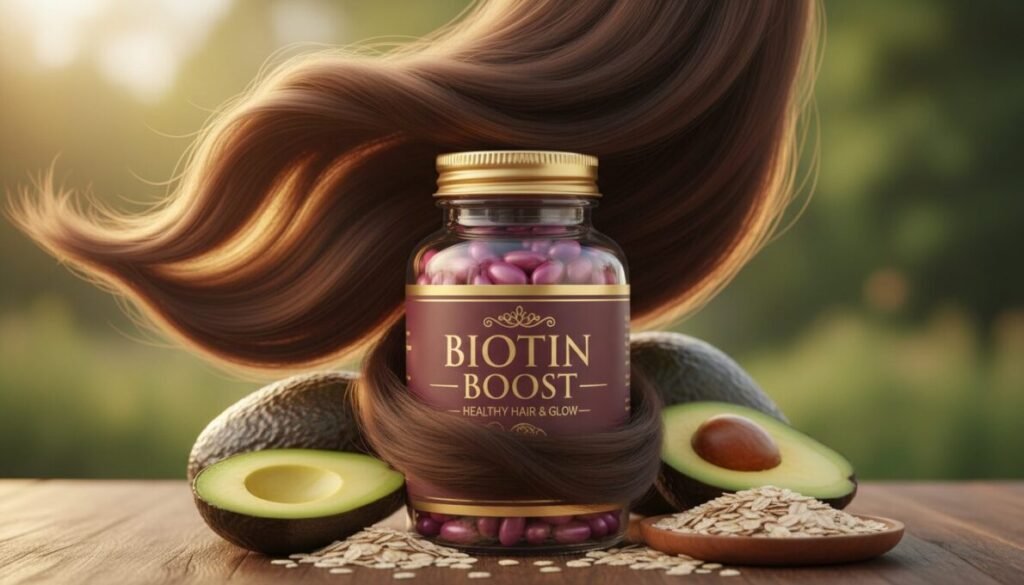
It supports energy metabolism and helps build keratin, the protein that shapes hair and nails. For many people, this translates to modest benefits when intake is low.
Who sees the most benefit
Supplementation helps those with low dietary intake, certain medical risks, or clear signs like thinning hair or brittle nails. Many people already get enough from food, so gains are smaller for those with adequate diets.
Realistic expectations and safety
Biotin is not a fast fix. Noticeable effects on hair and nails often take 3–6 months of regular use. Higher doses don’t always improve results and can cause problems, such as interference with lab tests.
- Check product content to avoid accidental mega-dosing.
- Biotin commonly appears in multi-ingredient blends—read labels carefully.
Tip: Collagen supports broad structural protein, while biotin targets keratin pathways more directly.
Collagen vs. Other Beauty Supplements: What Works?
Clique your primary goal first: reduce fine lines and improve skin texture, or target thinning and breakage. Match the product to that goal and evaluate results on a set timeline.
Best for skin elasticity and hydration
Peptide supplementation tends to help skin elasticity and hydration. Trials show about 8–12 weeks for measurable smoothing of fine lines and reduced appearance of wrinkles.
Best for hair growth focus
Biotin is more likely to aid hair when dietary intake is low. It supports keratin pathways and can reduce shedding and breakage over 3–6 months in deficient individuals.
Where they overlap
Both product types support hair, skin, and nails, but by different routes: structural protein support versus vitamin cofactor roles.
- Decision filters: diet quality, deficiency risk, age-related decline, and primary outcome.
- Practical plan: pick one priority, track results for 8–12 weeks for skin or 3–6 months for hair, then adjust.
Food sources vs. supplements: collagen from bone broth, fish, and protein-rich diets
Real food sources deliver connective tissue protein alongside vitamins and minerals the body uses daily. That means meals can supply gelatin from long-simmered bones plus the zinc and vitamin C that support repair.
Top dietary sources
Bone broth yields gelatin when slow-cooked. It’s rich in connective tissue fragments and makes an easy base for soups and stews.
Chicken with skin and cartilage provides bite-sized portions of connective tissue in familiar dishes and adds dietary iron and B vitamins.
Fish skin and scales contain usable structural protein and omega fats. Pan-crisped skin or fish stock can boost intake without extra pills.
Key supporting nutrients
Natural production depends on more than just tissue protein. Vitamin C, zinc, and copper help the body use amino acids to rebuild fibers.
Eating vitamin-C rich produce and zinc-containing foods along with protein-rich meals improves the process the body uses to maintain tissue.
Practicality check
Bone broth and slow cooks take time. Matching the steady daily dose many trials use can be tricky with meals alone.
Supplements make dosing easier and more consistent for busy schedules. But a food-first approach works well if you meal prep and focus on nutrient density.
Balanced plan: combine regular protein-rich meals, targeted nutrients, and a supplement only if you need standardized daily intake.
Powder vs. pills: which collagen supplement form delivers results?
Choosing the right format can change how easily you hit a study-tested daily dose. One scoop of powder often delivers 10 grams or more, while a standard capsule usually contains only 500 mg–1 g. That gap matters because many trials use multi-gram daily intakes to show measurable benefits.
Dose per serving
Powder makes it simple to reach target intakes. A single serving can supply 10 g+ so you meet evidence-aligned amounts without swallowing many pills.
Pills may demand several capsules to match that dose, which lowers adherence for busy users.
Mixability and routines
Hydrolyzed collagen peptides dissolve in hot or cold liquids. Mix into coffee, smoothies, soups, or oatmeal to hide texture and make daily use easy.
Better mixability increases consistency, and consistency often predicts the benefits people actually see.
Cost-per-gram and label reading
Evaluate value by dividing total grams per container by price. Powders usually win on cost-per-gram compared with tubs of capsules or single-use sticks.
Read labels: look for hydrolyzed collagen or collagen peptides, check serving size in grams, and note extras like vitamin C or sweeteners.
Practical takeaway: the best form is the one you use consistently, but powder often offers the easiest path to a meaningful daily dose.
Dosage, timing, and stacking: how to take collagen (and whether to combine with biotin)
A consistent daily dose is the single best habit to support structural protein rebuilding. Aim for a plan that you can follow for weeks to months, since many trials show effects only after consistent use.
Typical effective range
The commonly studied range runs from 2.5 grams to 10 grams per day. Lower doses near 2.5 grams may help some people, while many trials use multi-gram servings for clearer results.
Timing and absorption
Peptides and amino fragments can appear in the blood within about an hour and remain elevated for several hours. You can take doses with or without food.
Spacing total protein and amino intake across the day helps the body keep steady building-block availability. Consistency matters more than the exact clock time.
Pairing with vitamin C
Vitamin C supports the biochemical pathways that convert amino pieces into stable fibers. Many products add vitamin C because it helps the body use those amino and peptide fragments efficiently.
Stacking with biotin
Yes — you can take a peptide powder and biotin together. That combo makes sense if you want both skin-focused support and targeted hair/nail cofactor action.
Mixing a morning coffee dose with a multivitamin or taking collagen in a smoothie and biotin later works fine. Avoid duplicate high-dose biotin from multiple products.
“Pick a daily dose you can keep using, add vitamin C for support, and match extra nutrients to your goals.”

| Goal | Typical daily dose | Timing tip |
|---|---|---|
| Skin elasticity | 5–10 grams | Once daily, morning or evening |
| Maintenance / low dose | 2.5 grams | Daily with a meal or drink |
| Hair + nails (stack) | 2.5–5 grams + biotin | Split doses or pair with vitamin C |
Side effects, safety, and who should be cautious
All supplements carry a small chance of side effects, and knowing the likely ones helps you decide safely. Most reactions are mild, but they can affect whether someone keeps using a product.
Common reactions to expect
Typical side effects include digestive upset, mild indigestion, or diarrhea. Some people report a bad taste, headache, rash, dizziness, or sleep changes.
These issues are usually temporary and resolve after stopping or adjusting dose, but they can reduce adherence.
Allergy and fish product risk
Products derived from fish can trigger allergic reactions in sensitive people. If you have a known fish allergy, avoid fish-based formulas.
Rarely, severe reactions like anaphylaxis can occur. Always check labels and stop use if you notice hives, swelling, or breathing trouble.
Biotin and lab test interference
High-dose biotin may skew common lab tests, including thyroid panels, cardiac markers, and hormone assays. This can lead to misleading results.
Tip: tell your clinician or lab staff about any biotin use before testing, and pause if advised by your provider.
Who should use caution
- Pregnancy or breastfeeding: discuss with a clinician before starting.
- People with allergies to fish or other source ingredients.
- Those on multiple medications or with chronic conditions that require monitoring.
- Anyone with planned lab work—disclose supplement use to avoid false results.
Quality matters: choose products with third-party testing, clear sourcing, and no hidden proprietary blends. Transparent labels list exact gram or milligram counts.
“If new symptoms appear or you manage health conditions, consult a healthcare provider or pharmacist before continuing.”
| Safety area | Common signs | Who is most at risk | Practical step |
|---|---|---|---|
| Gastrointestinal | Indigestion, diarrhea, nausea | Those new to daily protein powders | Lower dose, take with food, stop if persistent |
| Allergic (fish) | Hives, swelling, breathing trouble | People with fish allergies | Check label; avoid marine sources |
| Neurologic / general | Headache, dizziness, taste issues | Sensitive individuals | Try different form or brand; consult clinician |
| Lab interference (biotin) | False thyroid or cardiac results | Anyone having blood tests | Inform lab; pause biotin before testing if advised |
Conclusion
Deciding what to try starts with a clear goal: choose a peptide-based plan for firmer, hydrated skin, or opt for a biotin route if thinning hair and brittle nails are the main concern.
Practical rule: aim for a daily peptide dose in the 2.5–10 g range and pick a form you will use consistently—powder often makes daily intake easier.
Combining both can make sense for broad support, but read labels to avoid stacking high biotin doses. For safety, avoid marine sources with fish allergies and tell your clinician about any biotin use before lab work.
When in doubt, consult a clinician to match choices to diet, lifestyle, and overall health.